
Winter wedding: what nobody tells you before you choose your date
I got married on the 9th of November. Since then, the question I am asked most is not "how did it go", it is "were you not cold ?". Short answer: no. Honest answer: there are things autumn and winter really change, and they are not the ones you think.
A winter wedding is not a summer wedding with coats on. It is a day that follows other rules, including one that drives everything else and that nobody mentions: what time the sun sets. Here is what to know before you set your date.
Why get married in winter, really
Let us put the brochure arguments aside. Here is what concretely changes.
You get the choice. By far the first point. The venues, caterers and photographers you admire are booked two summers ahead. In January, February or November, they are free, and free for you rather than for their third wedding of the week.
Your vendors are fresh. A caterer on their ninth Saturday in a row in July does not give you what they give in February. It is not a question of professionalism, it is fatigue.
Your guests are available. In August, the most organised people booked their holidays months ago. You ask them to undo their plans. In winter, outside the festive season, you just ask for a week-end.
The light is more beautiful. Clear skies, deep greens, long shadows. Photographers love this season, and they will tell you so.
Provence in winter, for couples flying in
If you are coming from the US, the UK or northern Europe, winter in Provence is not what you picture.
It is mild. Daytime temperatures in November and March often sit between 12 and 18 degrees, with sunshine. The day after my wedding we had brunch in t-shirts. December to February is cooler, and the mistral can make it feel colder than the thermometer says.
Flights and hotels are cheaper. Low season prices apply to your guests too. For a family flying across an ocean, the difference is real, and it is a gift you give them without spending a cent.
You have the region to yourselves. No summer crowds in the villages, tables free in the best restaurants, markets for locals. Your guests get the Provence that residents know.
Some places close. A number of hotels and restaurants shut from November to March. Check the accommodation for your guests before you commit to a venue, not after.
What winter changes on the budget
Precision matters here, because this is where the most myths circulate. Winter is not automatically cheaper, and not evenly.
The venue, yes. This is where the low season really shows. Many estates have a different rate out of season, and above all they negotiate: more hours, more options, less money, something they never do for a Saturday in May, June or July.
The caterer, a little. Winter produce is sometimes cheaper, but labour costs the same. Do not expect miracles.
Flowers, no. Often the opposite. What blooms naturally in February is limited, and everything else has travelled. Build your decor with what grows at your date, or go greener rather than floral.
Accommodation, yes. Low season rates apply to your guests as well.
Heating and lighting, extra. A new line nobody anticipates. A heated marquee, patio heaters, lighting that works from 5pm: budget for it from the start.
A frank word on price, because it is my job to say it: I did not choose November to save money. We had been offered an estate at half price on a second week-end of August, a date that had just been cancelled: 7,500 euros instead of 15,000. We said no. The crushing heat, and above all guests we refused to pull out of their August holidays. A date is not chosen on price. It is chosen for the day you want to live, and for what you ask of the people you love.
Where to get married in winter
Choosing a winter venue comes down to one criterion, before looks: can everything happen indoors without feeling like a plan B ?
The estate with a real room. Not a sad fallback room behind the beautiful barn, a room you would be happy to show in your photos. Always visit imagining it is raining, because one day it will.
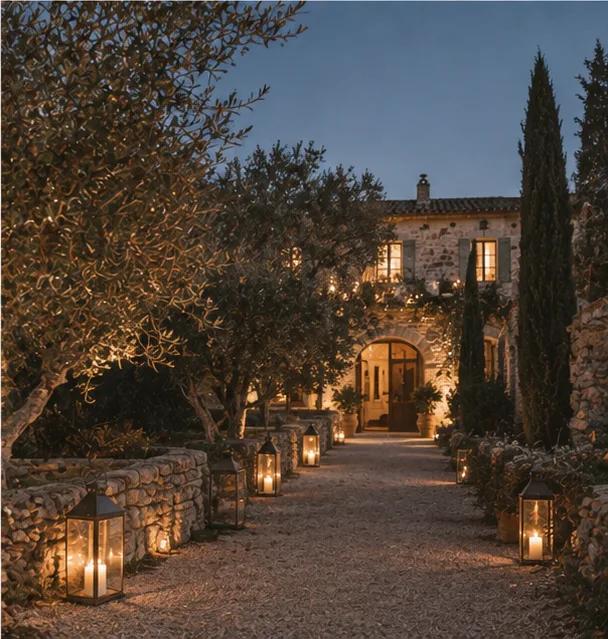
The bastide or mas with fireplaces. In Provence, many mas have been built for winter for three centuries: thick walls, fireplaces, warm small rooms. A winter reception there is far gentler than a summer one in the same place.
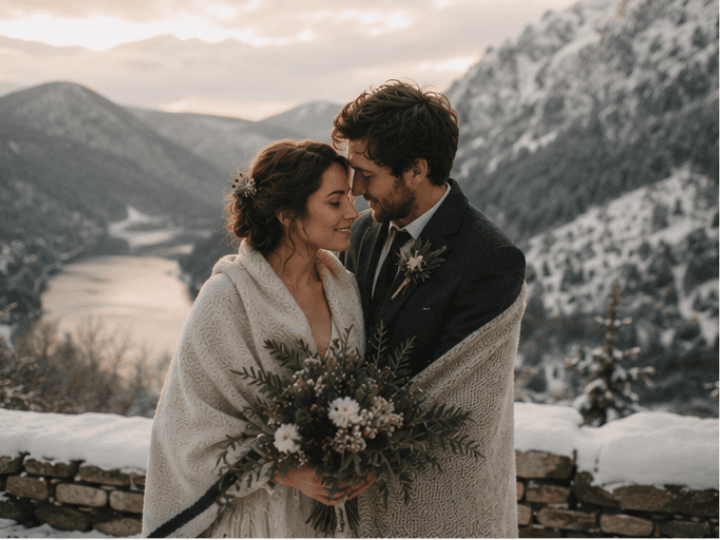
The mountains. A winter wedding in the Southern Alps is the only case where weather becomes scenery rather than a risk. Chalet, snow, fire. The serious catch: access. Check your guests can drive up, and have a solution if the road closes.
Three questions to ask on a visit that nobody thinks of in winter: how is the room heated and from what time, where do guests leave their coats (not on the back of their chair !), and is the path from the car park lit and walkable in heels when it is dark at 6pm. More on venue search in my article on wedding estates in Provence (dedicated blog article coming soon).
The time: the real winter wedding question
In December, the sun sets at 5pm. The rest of the year, I build the schedule backwards from sunset, so the photo session ends in the last light. In winter that calculation gives an absurd result: the bride would have to get up at 5am.
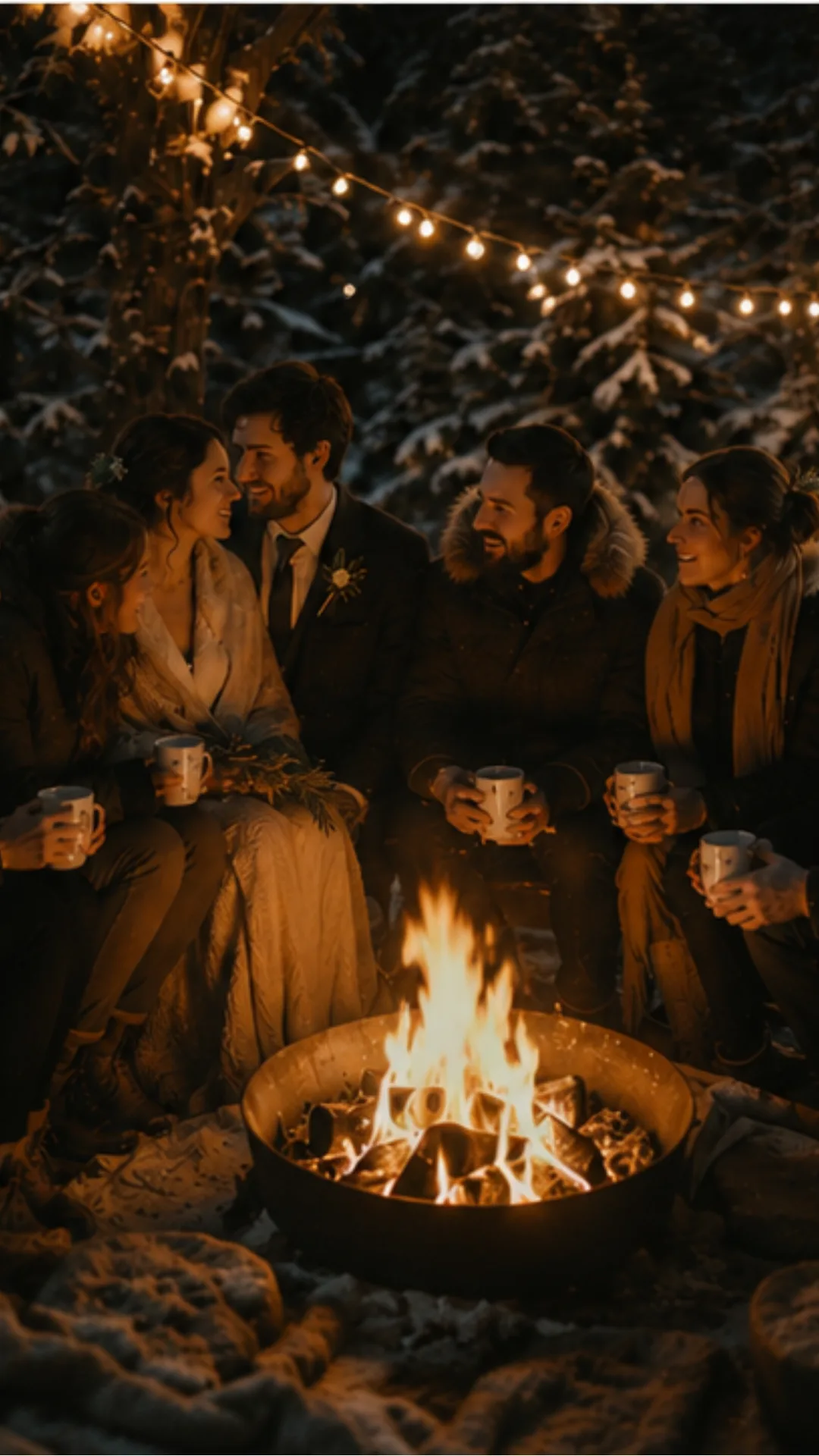
So in winter, the rule changes. The day is no longer anchored to the light. Photos are taken in the cocktail hour light, and the cocktail stretches to absorb the wait. In practice:
8am wake-up, 9am hair and make-up for about three hours, 12.30pm getting dressed.
1.30pm guests arrive, 2pm ceremony, about an hour.
3.30pm photo session at a fixed time, without chasing golden hour.
5pm cocktail, which lasts three hours. It carries the evening.
8pm dinner, 11pm first dance.
What you lose: the golden outdoor photos of your friends married in June. What you gain: a day that starts at a humane hour, and guests who last until the end because they have not been up for fourteen hours. The full hour-by-hour schedule is in my article on the wedding day schedule (dedicated blog article coming soon).
One practical point: a three-hour cocktail in winter cannot be held standing outside. You need seating, an indoor space and something to keep people busy. It is where I put most attention in the low season.
Theme, colours and decoration
A successful winter wedding does not try to imitate summer under a blanket. It plays what it has: low light, textures, fire.
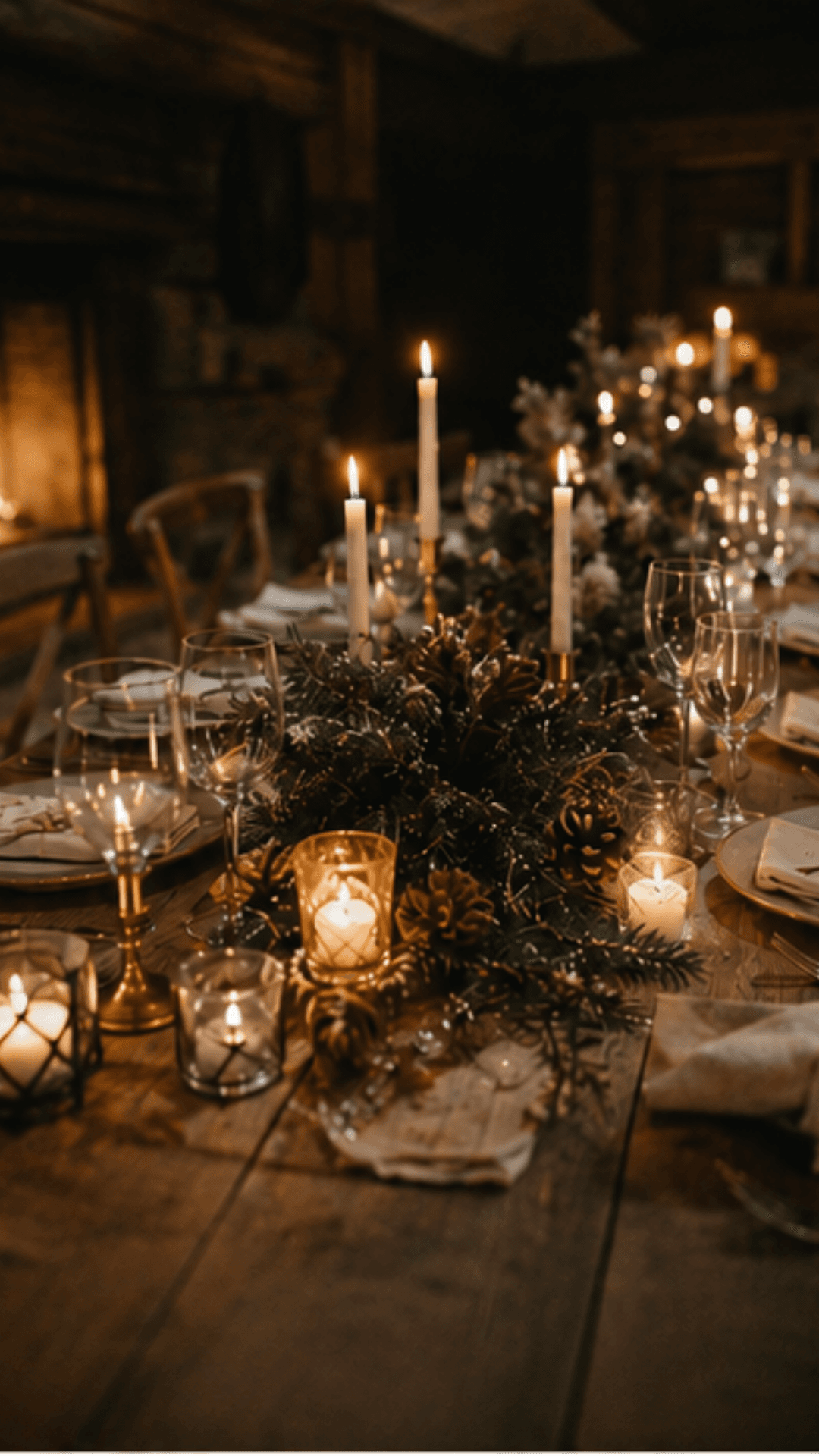
Light is your first decor budget. It is dark from 5pm. LED candles in numbers, string lights, lanterns along the paths. What you spend on light you do not spend on flowers, and the effect is ten times stronger.
Textures rather than colours. Wool, velvet, heavy linen, raw wood, ceramics. A winter table is touched as much as it is looked at.
A restrained palette. Deep greens, browns, off-white, and a single accent colour. Avoid piling on white and silver, which quickly looks like a Christmas shop window.
Seasonal greenery. Eucalyptus, branches, holly, pine, dried fruit, citrus. Local, available, far cheaper than an imported peony, and it smells good.
If your date falls in December, decide early about Christmas: embrace it fully or avoid it fully. Halfway always feels like a wedding held in someone else's decorations.
What to plan for your guests
A real cloakroom. A hundred coats take space and get lost. A dedicated area, rails, and someone in charge on arrival.
Heating announced in advance. Say it in your practical information: the room is heated, the ceremony is indoors, there are heaters on the terrace. Your guests will stop worrying.
Night-time journeys. At 11pm in January it is pitch dark and it may freeze. Shuttle, organised car-sharing or on-site accommodation. Settle it when you build your guest list, not the week before.
A word on dress code. Guests wonder far more than in summer. One simple line saves fifteen messages. I wrote a whole article on what to wear to a winter wedding (dedicated blog article coming soon).
My 9th of November, and what I could not plan
It rained three times that day. Three drops each time. I never needed my umbrella. Then the sky opened, and there was a rainbow on the road to the estate. The next day we had brunch at 25 degrees.
Now the honest part. That week-end, the French railway had scheduled major works: no trains between Paris and Marseille. Unpredictable and extremely rare. Some guests went round through another city, one family flew. Another family had cancelled well in advance, eight hours of driving with two toddlers.
That is the truth about the low season: it does not remove the unexpected, it changes its nature. In August you face heat and competition. In November you face something else. The question is not which season is risk-free, it is which risks you prefer to carry.
In short
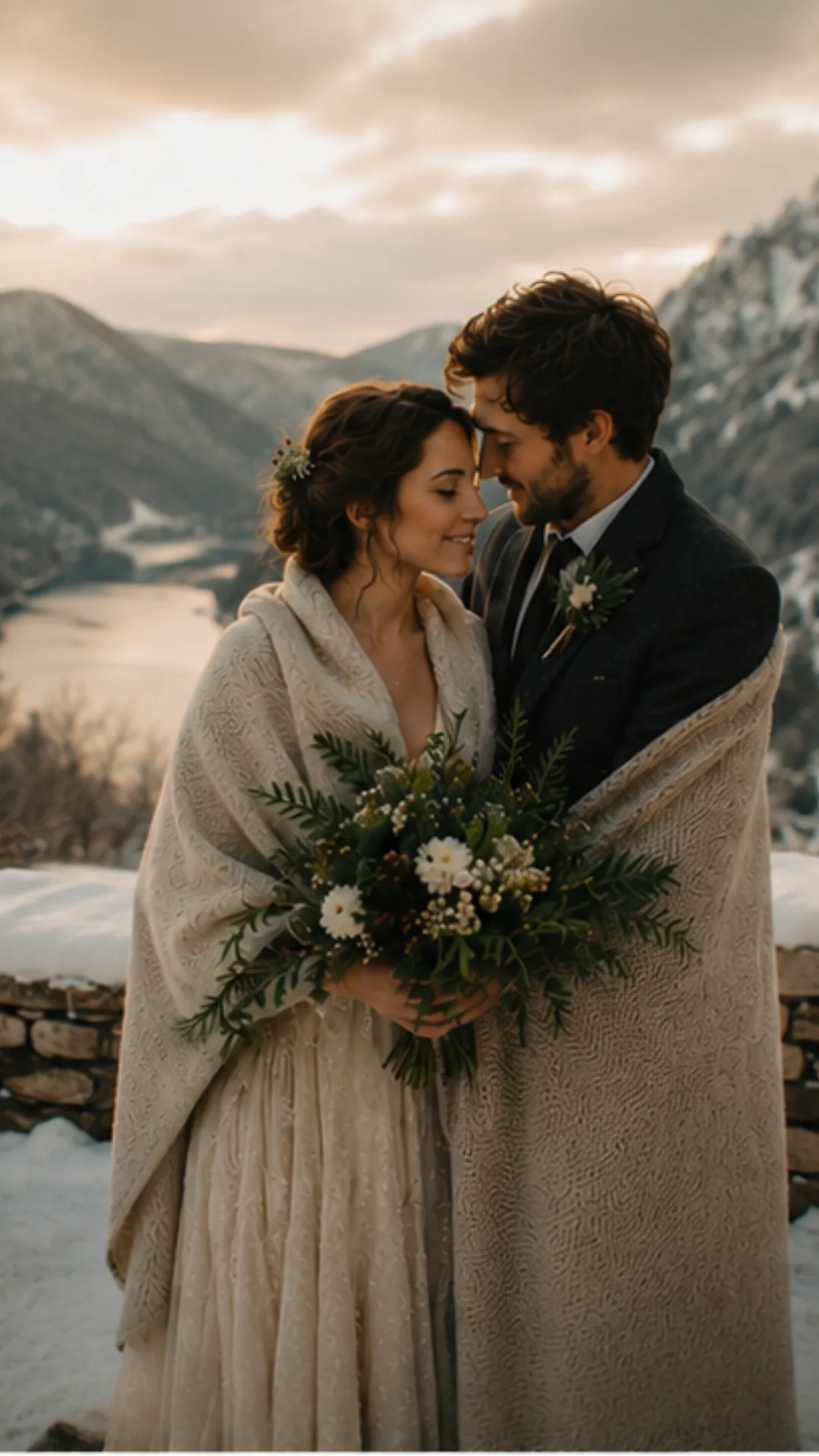
Getting married in winter means trading the golden evening light for your choice of vendors, available guests, a softer venue budget and a day that starts at a reasonable hour. A very good trade, as long as you make it knowingly.
The three decisions that count: a venue where everything can happen indoors without being a plan B, a schedule built around a long cocktail rather than the sunset, and real care for your guests' comfort. For the date itself, see how to choose your wedding date. And for who holds it all together on the day while night falls at 5pm, that is exactly what wedding day coordination is for.
Considering a low season date and want to know what it changes for you ? Let us talk on a discovery call, or have a look at my planning packages.
FAQ
Which is the cheapest month to get married?▾
Do we need a plan B for snow?▾
Can we have an outdoor symbolic ceremony in winter?▾
How far ahead should we book a winter wedding?▾
Are guests less willing to come in winter?▾
Would you like a wedding that truly reflects you? Book your free video discovery call:
Book my free video call
Credits
Illustrative images, AI-generated or royalty-free.
Dear photographers,
Could your photos illustrate this article?
Text me!