
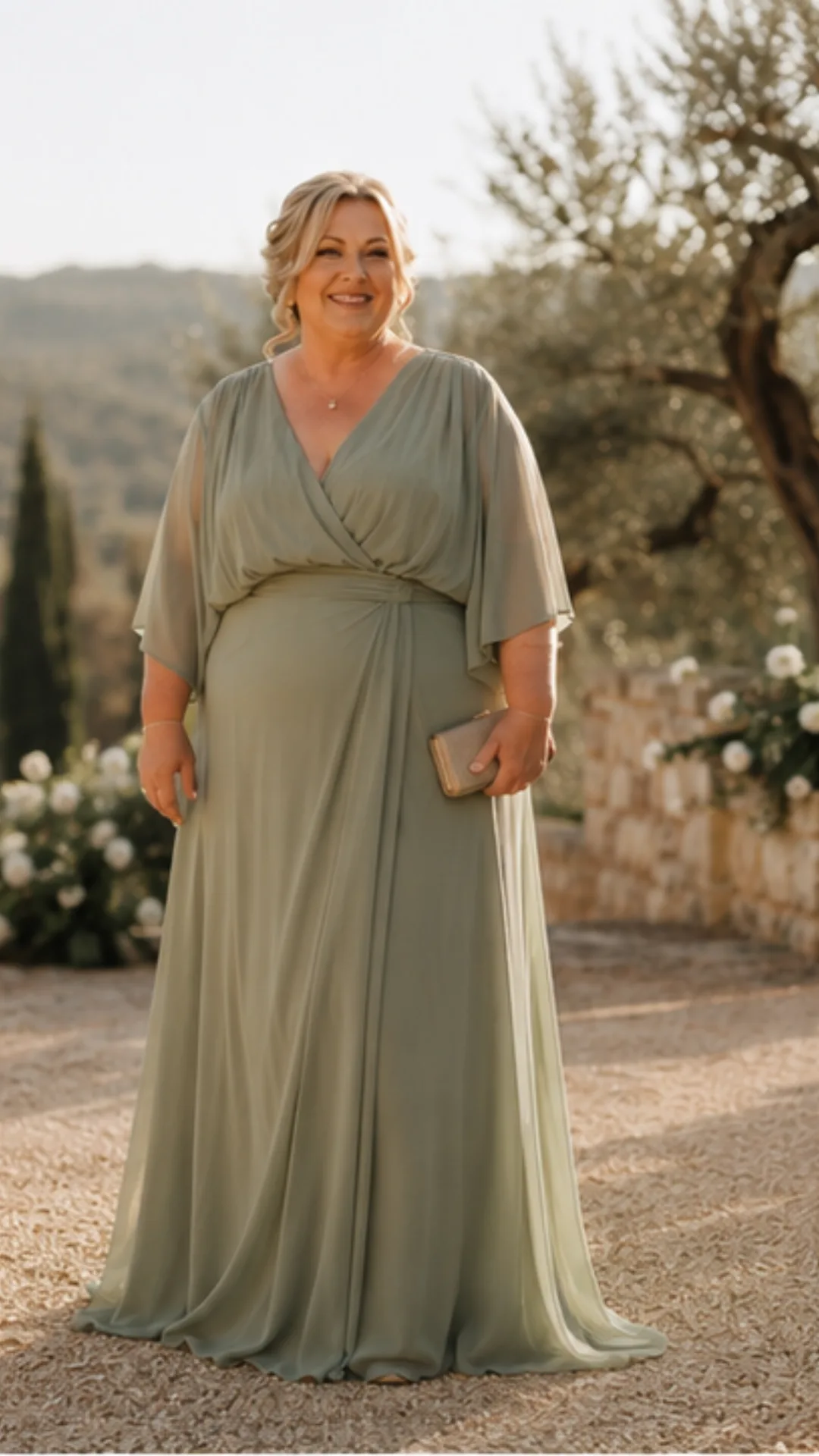
Plus size mother of the groom outfits: the complete guide
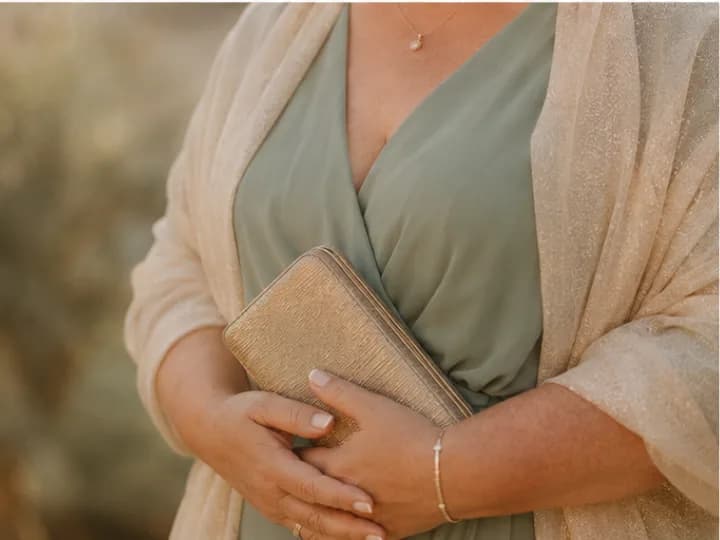
Your son is getting married. You are happy, a little emotional, and you have already spent three evenings scrolling through websites without finding anything you actually like. You are not alone: this is the conversation I have every season, and it almost always starts with the same sentence, "I want to look distinguished, not in costume".
Finding a plus size mother of the groom outfit that is elegant, appropriate and comfortable is entirely possible. It is not about concealing anything, but about choosing a cut and a fabric that work for you, and settling a few practical questions nobody thinks to ask. And if the wedding is in France while you live elsewhere, there are three more you really need to answer early.
Your place on the day
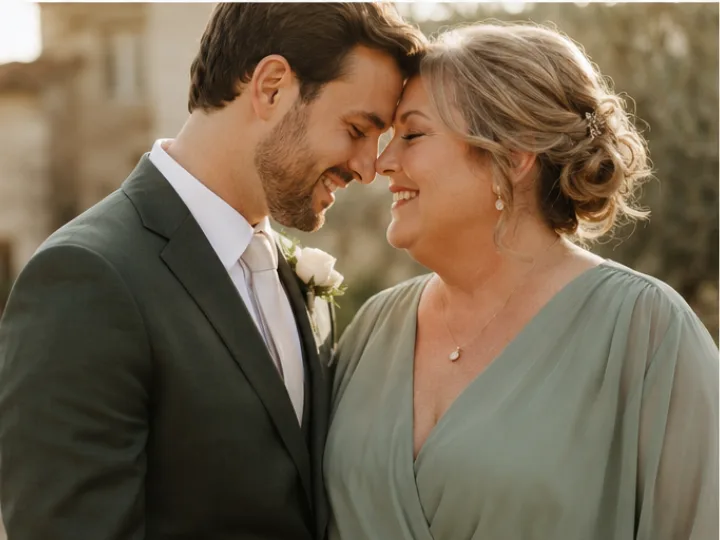
Let us start with the context, because it dictates the outfit. The mother of the groom is not just another guest. You will be in the family photographs, usually in the front row at the ceremony, and there is every chance you will walk in on your son's arm: in the classic French order, the mother accompanies the groom while the father accompanies the bride. The full running order is in my article on the wedding processional.
In practice this means three things. You will be seen from behind for the whole entrance, so the back matters as much as the front. You will be photographed next to the mother of the bride, so harmony between you matters. And you will wear it for twelve to fourteen hours, which makes comfort a criterion of elegance, not a compromise.
What is different at a wedding in France
If you are travelling to France for your son's wedding, four points catch families out every single year.
There are two ceremonies, not one. Only the civil ceremony at the town hall is legally binding here, so most couples hold it separately, often the day before. You will need one outfit that works for a small, official, sometimes cool town hall room, and one for the main celebration.
It is a whole weekend, not a day. Destination weddings in France almost always run from a Friday welcome dinner to a Sunday brunch. Plan three outfits, not one, and make the wedding outfit the only one you agonise over.
French sizing is its own system. It matches neither UK nor US sizing, and it varies between brands. Never order from a size chart alone: ask for the garment's measurements in centimetres and compare them to your own.
Have alterations done at home. Bring the outfit finished, in your hand luggage. Finding a seamstress in Provence in the week of the wedding is possible, but it is not how you want to spend those days.
One more, less obvious: French weddings have no tradition of the two mothers wearing coordinated outfits, unlike in some countries. You are not expected to match anyone. You are expected to look like yourself.
When to start
Start looking four to six months before the wedding. That sounds like a lot; it is not. Plus size occasionwear is a narrower market, delivery times are real, and alterations need two to three weeks. Add another two weeks if the outfit has to cross a border.
Six months out: you speak to the mother of the bride and agree on the register.
Four to five months out: you search and order, buying the size you are now.
Two months out: first fitting with the final shoes, and alterations begin.
Three weeks out: final fitting, complete outfit, accessories included.
The week before: you change nothing. That is a rule, not advice.
Slot these into the couple's overall planning timeline so your fitting does not land on the weekend of the caterer tasting.
The conversation with the mother of the bride
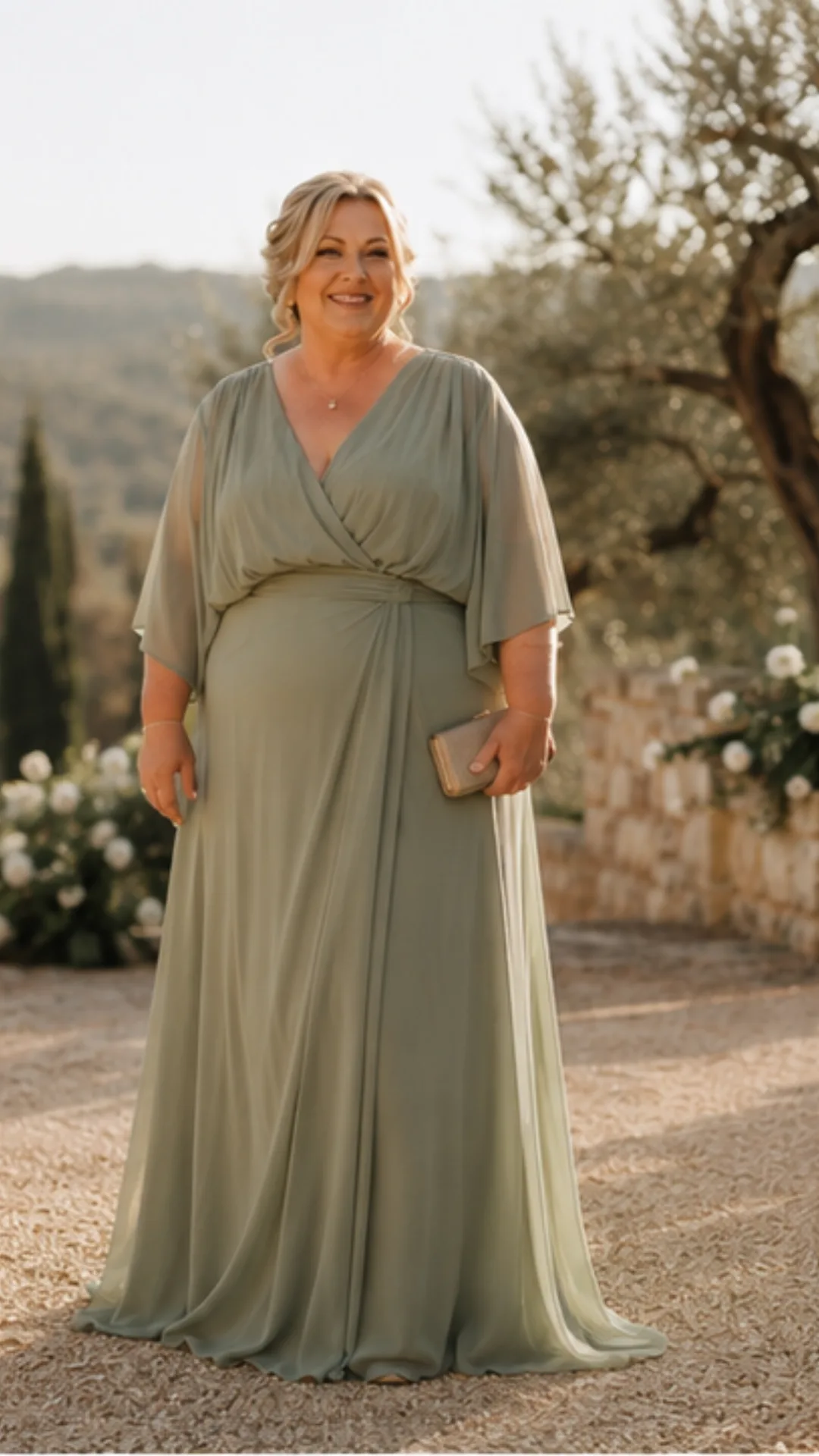
This is the first piece of advice I give, and the one that prevents the most friction. Call her, and agree on three points: the level of formality, the length, and the family of colours.
Custom has it that the mother of the bride chooses first and the mother of the groom then aligns. It is not about precedence, it is about photographs: two mothers dressed at the same level produce balanced images. A full-length gown next to a short suit shows instantly in the family portraits, and it is exactly the kind of detail people still mention twenty years later.
You only need to agree on the register, not on the model. Your style stays yours. And if the conversation is awkward, go through the couple: it is their wedding, they will happily decide, and it spares you a point of tension. When the two families live in different countries, do this on a video call rather than by message, and show each other actual photographs.
Dress, suit or trousers
The dress. The classic. Midi length, below the knee, is the most versatile and the most elegant in photographs. A full-length gown suits an evening ceremony perfectly.
The two-piece. A worked top with a fluid skirt, or a dress with a matching jacket. The most modular option: the jacket comes off when the temperature climbs.
The trouser suit. Chic, comfortable, and finally recognised as proper occasionwear. Wide crepe trousers with a dressy top are as elegant as a dress, and infinitely more pleasant over a full day. The same cut principles apply as for brides, which I cover in my article on wearing trousers to a wedding.
Cuts and fabrics that fall well
Fabrics
Crepe, especially satin-backed crepe: it hangs straight, does not crease, does not cling. The safest choice there is.
Lined chiffon, light and moving, perfect outdoors and in summer. Lined, without exception.
Heavy jersey and jacquard, which structure the silhouette without rigidity.
Handle with care: shiny satin, which catches the flash and highlights every fold, and fine knits that cling.
Always check the lining. Unlined occasionwear buckles after three hours and turns transparent in bright sun, which in the South of France is not a theoretical risk. If you love the piece but it is unlined, have it lined: it is a routine, inexpensive alteration.
Cuts
Three-quarter sleeves. The best compromise of the lot: they dress the arm, leave the wrist free, and save you from wearing a jacket in thirty degrees.
A V or sweetheart neckline, which opens the chest and lengthens the line.
A marked waist, placed where yours actually is. A belt in the wrong place does more damage than no belt at all.
A fitted armhole. The technical detail that separates an outfit that sits well from one that gapes, and the single most useful alteration.
The general principle, if you keep only one: choose for your body, never against it. A fabric that falls and a cut fitted in the right places give a presence that no garment designed to conceal will ever give.
Colours
Navy and teal, probably the safest of all.
Emerald, sage and almond green, particularly beautiful in a garden setting.
Plum, burgundy and terracotta, superb for an autumn wedding.
Bronze, taupe and champagne, softer and very photogenic at the end of the day.
Powder pastels, antique rose or sky blue, better outdoors and in the warm season.
Three colours need thought. White and ivory belong to the bride, no discussion. Full black reads as austere to some families: it works well warmed up with coloured accessories, less well as a total look. And bright red catches the eye in absolutely every group photograph, which pulls attention away. If you love it, keep it for a detail.
One last reflex, often forgotten: ask the couple for their colour palette. Most have one, and nothing is nicer than a family photograph where the tones answer each other.
Where to look
Specialist plus size occasionwear ranges. The simplest route, with the advantage of trying things on. Go on a weekday, early, when the fitting rooms are free and you are not rushed.
Designers and dressmakers. More expensive, but the cut is made for you. Allow three months and two to three fittings.
Rental. It has grown considerably, including in plus sizes. For an outfit worn once, it is economical and consistent with an eco-friendly wedding (dedicated blog article coming soon).
Second-hand. An excellent route for occasionwear, usually worn a single day. Just budget for alterations.
Allow 150 to 600 euros for a complete outfit, and always keep 80 to 150 euros for alterations. A 200-euro dress perfectly fitted is far more elegant than a 500-euro dress worn as it came. It is the best value-to-result ratio in this entire subject, and the step most often skipped.
Lasting fourteen hours
Shoes. A wide heel of four to five centimetres maximum, never a stiletto if the ceremony or drinks reception is on grass. In the garden of a Provencal mas, a thin heel sinks straight into the ground. Bring a second flat pair for the evening, and wear both for a full day at home first.
Underwear. A properly fitted bra, tested over a whole day, changes the silhouette more than the outfit does.
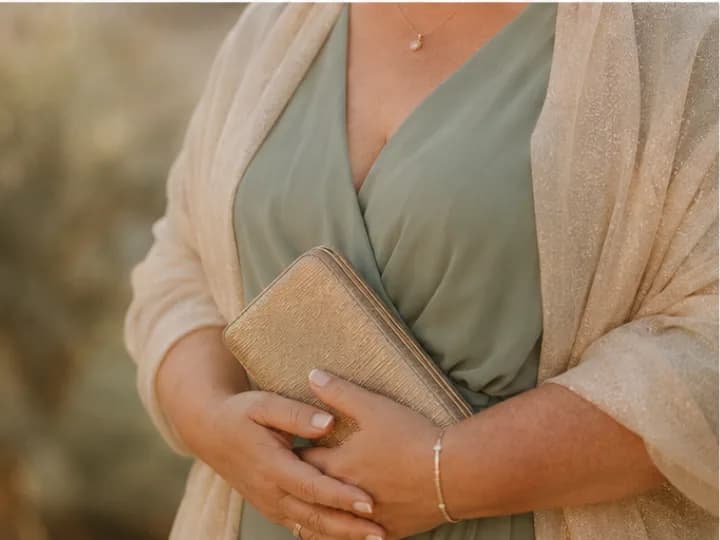
Temperature. In Provence in July, a lined outfit is an oven in the afternoon. Conversely, the gap between the drinks reception and the end of the evening often exceeds ten degrees once the sun goes down. A shawl or a light jacket is not an accessory, it is a necessity. This is worth checking against the season the couple chose for their date.
The emergency kit. Safety pins, stain wipes, plasters and a lipstick in a small pouch. Hand it to someone if your outfit has no pockets.
And in the photographs
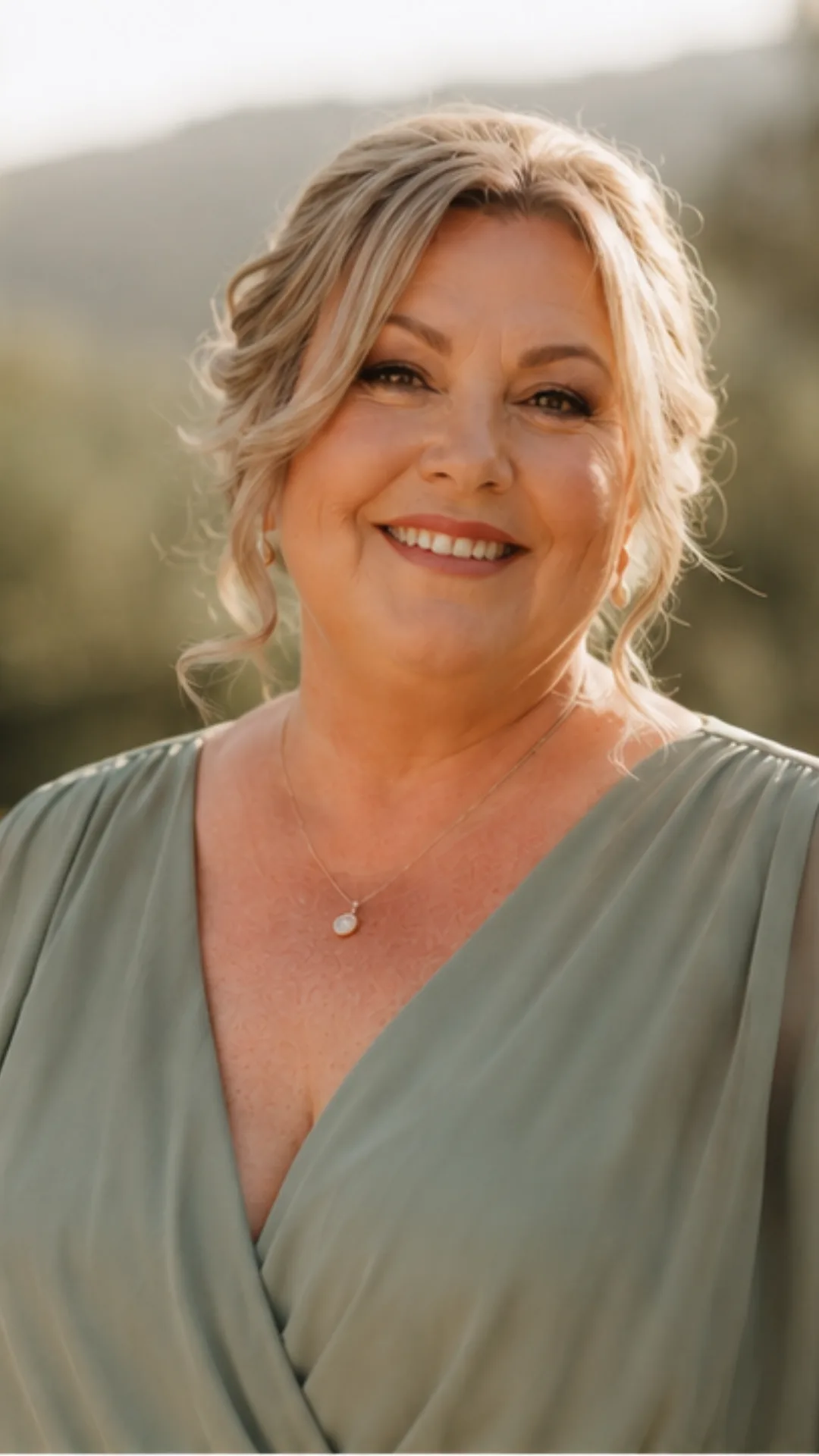
One piece of advice I give every mother, and it is worth more than any garment: posture does half the work. Turn forty-five degrees rather than facing the camera, put your weight on the back leg, move the arm slightly away from the body, and bring the chin a little forward. Four tiny movements, and they change a photograph completely.
And something more important still. You will be photographed watching your son get married. What the picture will hold is not your outfit, it is your face at that moment. Choose something you stop thinking about, and you will have the most beautiful images of the day.
In short
A successful mother of the groom outfit comes down to little: a fabric that falls, a cut fitted in the right places, a deep colour, and shoes you can still stand up in at midnight. Talk to the mother of the bride early, keep budget for alterations, bring it finished if you are flying, and stop searching three weeks before. The rest of the day is not yours to control, but this part is entirely.
Are you organising your child's wedding, perhaps from another country, and would like someone on the ground to carry the load so you can actually enjoy the day? Have a look at my planning packages, or let us talk on a discovery call.
FAQ
Should we ask the couple to approve the outfit?▾
Can I wear the same colour as the mother of the bride?▾
What do I wear if there is a town hall ceremony and a separate celebration?▾
What if I expect to lose weight before the wedding?▾
What if my son asks me to wear a colour I dislike?▾
Would you like a wedding that truly reflects you? Book your free video discovery call:
Book my free video callCredits
Illustrative images, AI-generated or royalty-free.
Dear photographers,
Could your photos illustrate this article?
Text me!